


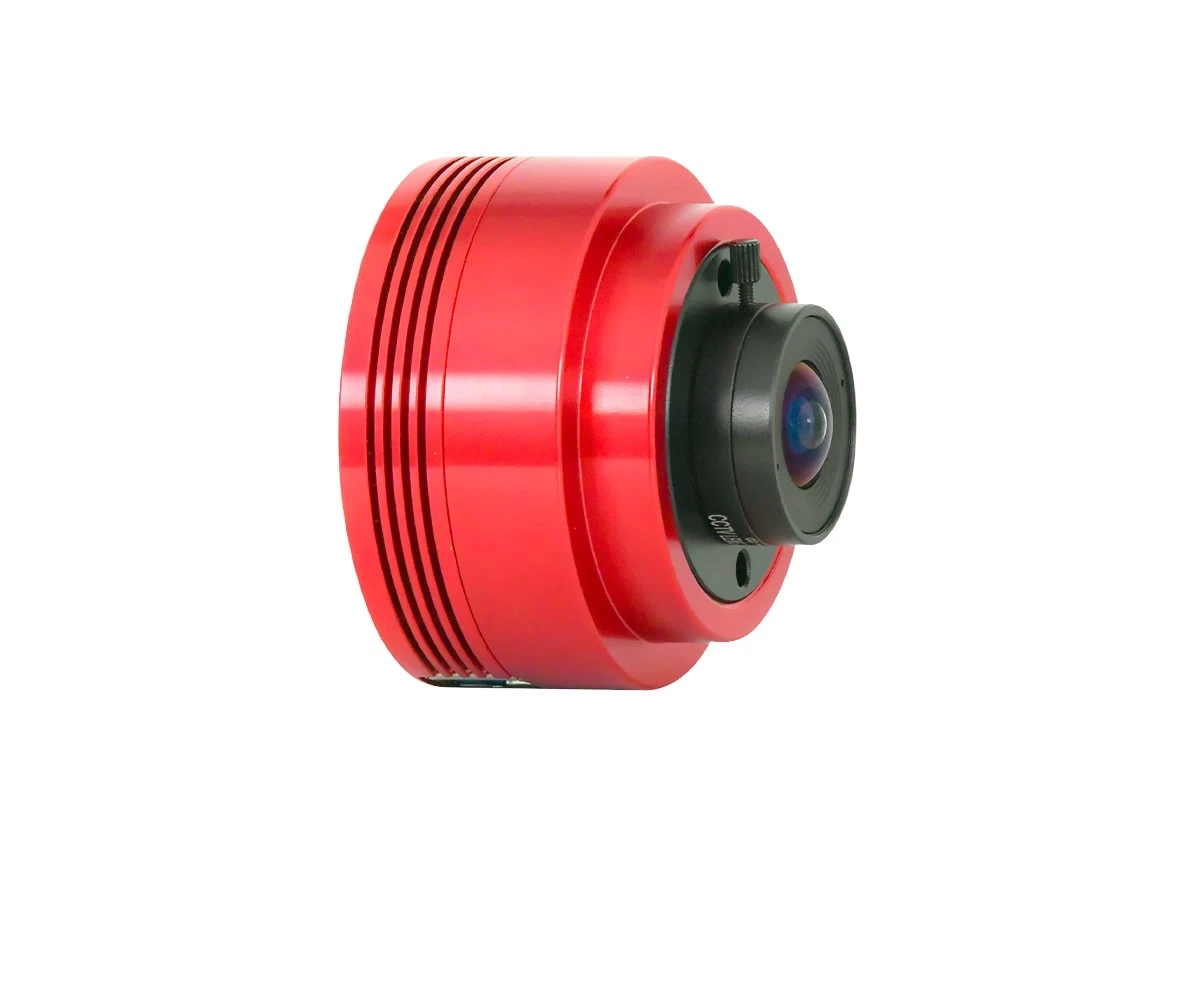
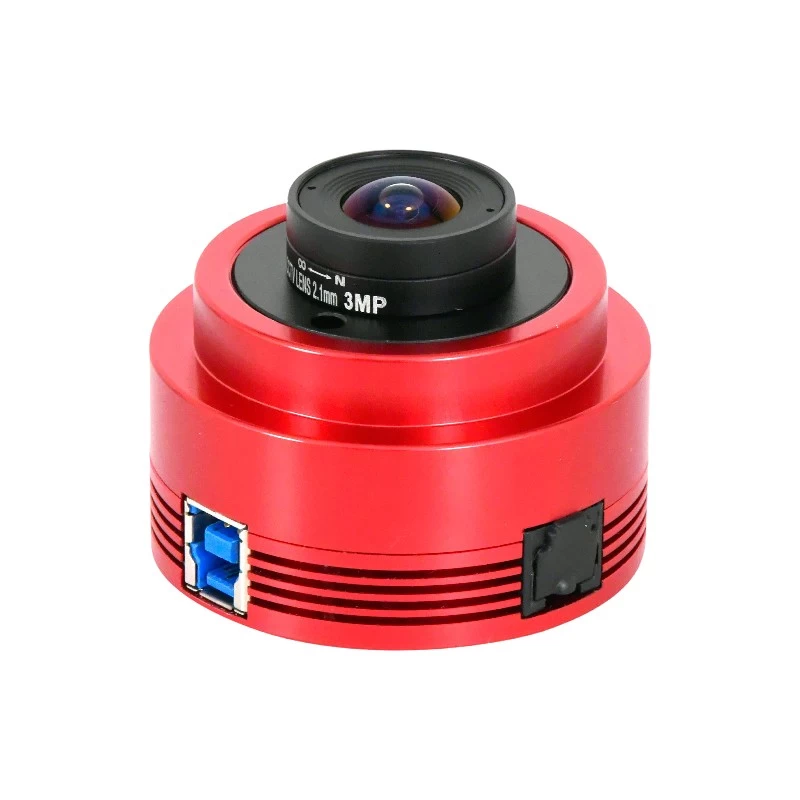
The ZWO ASI 715 MC colour camera, thanks to its sensor size and resolution, is ideal not only for Solar, Lunar and planetary imaging, but also for capturing more compact deep-sky objects. Naturally, it also performs well as a guide camera. This model successfully eliminates the “amp glow” effect that can occur at high gain settings.
Compared to earlier models, Sony’s back-illuminated IMX715 sensor offers higher sensitivity (80% QE) and lower read noise. The 8.46-megapixel (3864x2192) sensor features passive cooling via a thermal pad, allowing it to operate at temperatures up to 15°C lower during long-exposure imaging. Compared with monochrome cameras, colour, so-called “single-shot” cameras make imaging easier for those who do not wish to use the L-RGB colour filter technique. As the camera has no built-in UV/IR filter, it remains particularly sensitive to infrared wavelengths.
The camera features an USB 3.0 connection, enabling significantly faster image transfer rates, meaning that more frames can be captured within a given period when using larger image sizes. It is also compatible with the USB 2.0 standard. This is particularly important for Lunar and Solar imaging, and less so for planetary imaging. Thanks to its ST4 port, it can also be used as a guide camera. The camera can record video at 45.1 fps, or 45.1 frames per second, when capturing planetary, Lunar and Solar images. It is even suitable for EAA, or real-time digital astronomy, allowing certain objects to be observed during group sessions.
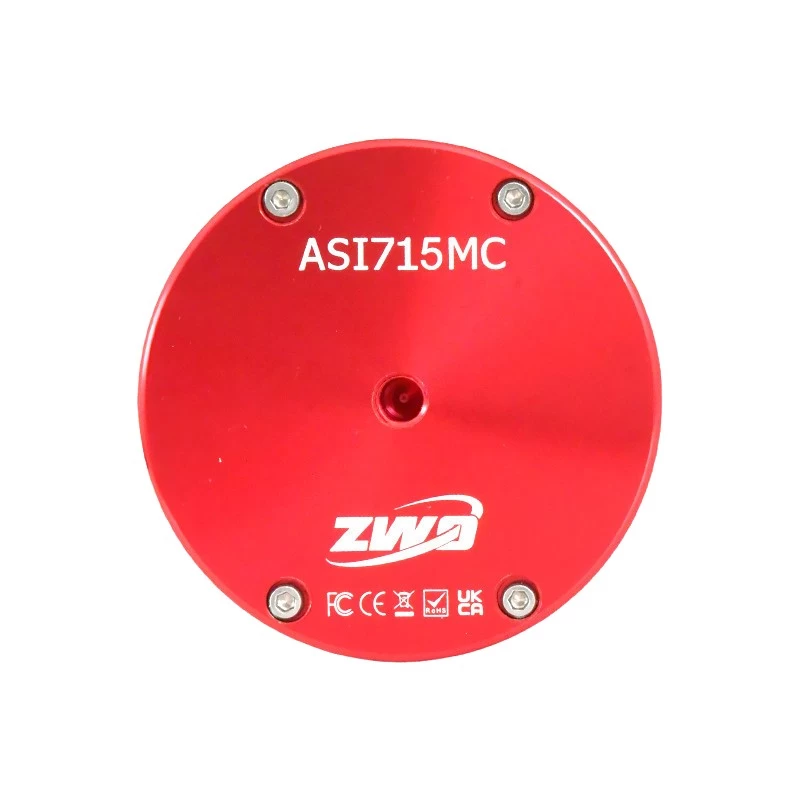
The rear of the ZWO ASI 715MC camera also features a standard 1/4-inch photo thread, allowing the camera to be mounted on a tripod, for example when used with the fisheye lens included in the basic package.
Numerous free imaging software packages are available online. For Windows, we particularly recommend SharpCap and FireCapture. The cameras require Windows XP or later, but can also be used under Linux and support Macintosh systems as well (for this, we recommend the USB 3 versions).


